
Enterprise Resource Planning (ERP) Software: How Modern Businesses Manage Operations More Efficiently
Running a modern business involves managing multiple departments, employees, financial records, inventory, customer information, and daily operations. When these activities are handled through separate systems, organizations can experience communication gaps, duplicated information, and unnecessary delays.
This is where Enterprise Resource Planning (ERP) Software becomes valuable. ERP systems bring important business processes together through a centralized digital platform, helping organizations manage their resources, monitor performance, and coordinate different departments.
From manufacturing companies and retail businesses to large enterprises and service providers, ERP software has become an important part of digital business management.
But how does ERP software work, and why are organizations investing in these integrated business solutions?
What Is Enterprise Resource Planning (ERP) Software?
Enterprise Resource Planning software is a business management system designed to connect different organizational processes within one integrated platform.
Instead of using disconnected applications for accounting, inventory, purchasing, human resources, and production, businesses can manage these activities through a shared system.
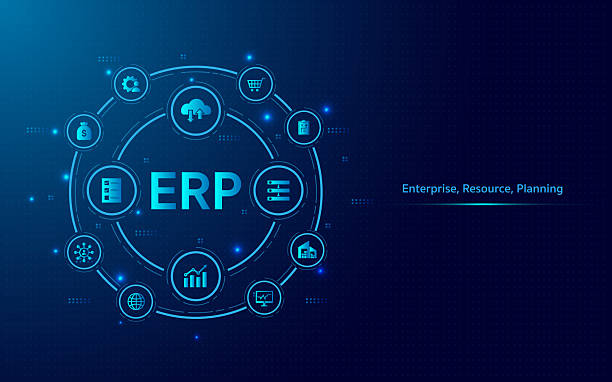
For example, when a retail company receives a new customer order, its ERP software can help update inventory records, generate financial information, and coordinate delivery activities.
In simple terms, ERP software connects the different parts of a business so they can work together using consistent information.
How Does ERP Software Work?
ERP platforms use a centralized database and connected software modules to manage business information.
The process generally involves four stages:
- Information Collection: Different departments enter business information into the ERP system.
- Data Integration: The platform connects information from finance, inventory, sales, HR, and other departments.
- Business Processing: Automated workflows help complete activities such as order management, invoicing, and purchasing.
- Reporting and Analysis: Managers access dashboards and reports to understand business performance.
This integrated approach reduces the need to transfer information manually between separate applications.
Major Benefits of ERP Software for Businesses
1. Centralized Business Management
ERP systems provide a shared environment where authorized employees can access relevant business information. This helps departments coordinate their activities more effectively.
2. Improved Productivity
Automated workflows reduce repetitive administrative tasks, allowing employees to focus on important responsibilities.
3. Better Financial Management
ERP software helps businesses manage expenses, invoices, financial records, budgeting, and reporting through connected financial modules.
4. More Effective Inventory Control
Companies can monitor stock levels, track product movements, manage purchasing, and identify inventory shortages.
5. Data-Driven Decision-Making
Integrated reports and dashboards give managers a clearer understanding of sales, costs, productivity, and operational performance.
Popular ERP Software Modules
ERP platforms usually consist of different modules that support specific business departments.
| ERP Module | Main Function | Business Benefit |
|---|---|---|
| Finance and Accounting | Manage financial records | Better financial control |
| Human Resources | Manage employees and payroll | Simplified HR operations |
| Inventory Management | Track stock and products | Better inventory visibility |
| Supply Chain Management | Coordinate suppliers and deliveries | Improved logistics |
| Customer Management | Organize customer information | Better customer relationships |
| Manufacturing | Manage production activities | Improved production planning |
| Procurement | Manage purchasing activities | More organized purchasing |
Organizations can select modules according to their operational requirements.
Types of ERP Software
Businesses can choose different ERP deployment models depending on their budgets, security requirements, and IT infrastructure.
Cloud ERP: Hosted by a software provider and accessed through the internet. It generally offers flexible access and provider-managed infrastructure.
On-Premises ERP: Installed and operated on an organization’s own infrastructure, providing greater direct control over the environment.
Hybrid ERP: Combines cloud-based and on-premises systems to support different operational requirements.
The best option depends on business size, technical resources, compliance obligations, and long-term plans.
Popular ERP Software Providers
Several established technology companies offer ERP platforms for different industries.
- SAP: Provides enterprise resource planning solutions for complex organizational operations.
- Oracle NetSuite: Offers cloud-based ERP and business management software.
- Microsoft Dynamics 365: Combines ERP and customer relationship management capabilities.
- Infor: Provides industry-focused enterprise software solutions.
- Odoo: Offers modular business applications for organizations of different sizes.
Each platform has different features, pricing structures, and implementation requirements.
Challenges of Implementing ERP Software
Although ERP systems offer significant advantages, implementing them can be complicated.
| Common Challenge | Recommended Solution |
|---|---|
| High implementation costs | Prepare a realistic budget |
| Employee resistance | Provide proper training |
| Data migration problems | Clean and validate information |
| Integration difficulties | Evaluate system compatibility |
| Project delays | Establish clear implementation goals |
| Security concerns | Apply access controls and monitoring |
A successful ERP project requires planning, employee involvement, reliable data, and ongoing technical support.
How to Choose the Right ERP Software
Before purchasing an ERP platform, businesses should evaluate several important factors:
- Business Requirements: Identify the departments and processes that need improvement.
- Scalability: Choose software that can support future organizational growth.
- Pricing: Consider licensing, implementation, training, and maintenance expenses.
- Integration: Check compatibility with existing business applications.
- Security: Review data protection and user access management features.
- Customer Support: Evaluate technical assistance and training resources.
Businesses should also request demonstrations and test important workflows before making a final decision.
The Future of ERP Software
ERP technology is evolving through artificial intelligence, cloud computing, automation, and advanced business analytics.
Modern ERP platforms increasingly incorporate AI-powered forecasting, automated financial reporting, intelligent inventory management, and predictive analytics.
These developments can help organizations identify operational problems earlier and make more informed decisions.
As businesses continue their digital transformation, ERP systems are expected to become even more connected, intelligent, and adaptable.
Conclusion
Enterprise Resource Planning (ERP) Software plays an important role in helping modern businesses manage complex operations. By connecting finance, human resources, inventory, procurement, manufacturing, and other departments, ERP platforms create a more organized business environment.
However, choosing the right solution requires careful planning, realistic budgeting, employee training, and an understanding of long-term organizational needs.
Ultimately, ERP software is more than a business management tool. It is a connected digital foundation that helps organizations improve efficiency, coordinate resources, and build sustainable growth.